



XI International Workshop on Information Geometry, Quantum Mechanics and Applications 2026
23 - 27 February 2026
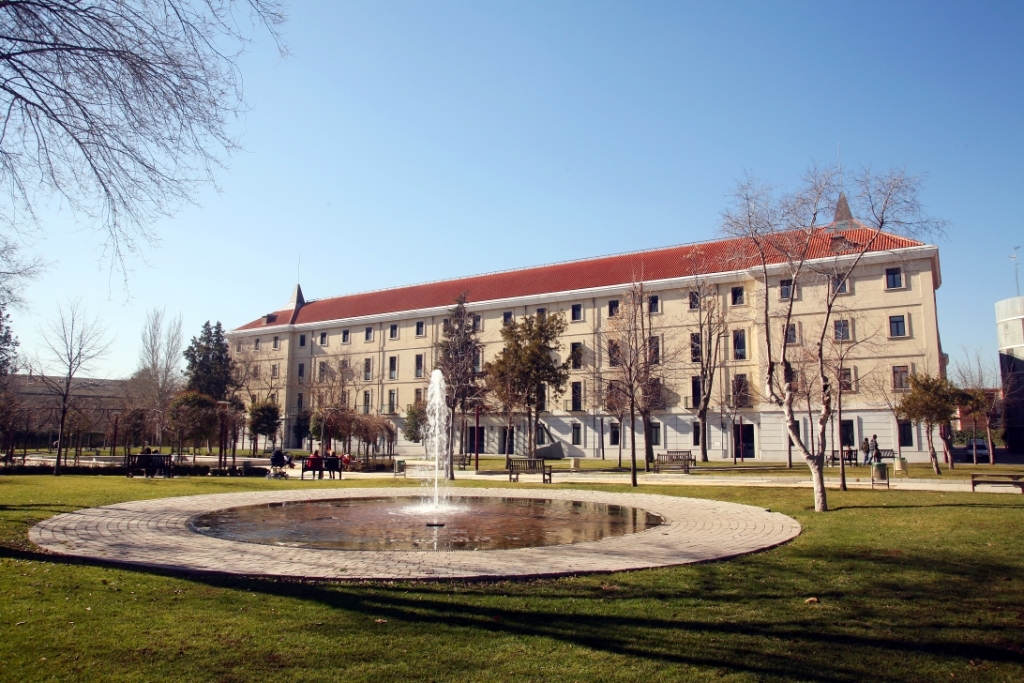
Universidad Carlos III
Nicola Aladrah.
Implicit bias in overparametrized models as a gauge correction
Many overparameterized learning models admit continuous reparametrization symmetries, so that different parameter values represent the same predictor. When training is noisy, the learning dynamics are naturally defined on parameter space, while generalization depends on the induced distribution on the space of predictors. In this talk, I explain how implicit bias arises as a geometric correction produced by reducing stochastic dynamics along symmetry orbits, closely analogous to a gauge-fixing or volume factor. I will also illustrate with standard examples such as matrix factorizations and attention models. And at the end I will introduce the principle of inverse design of the model parameters from the desired implicit bias.
Manuel Asorey.
Gauge invariance and quantum magic
We analyse how the interplay between entanglement and quantum magic constrains the structure of fundamental interactions, We show that the entanglement generated by the scattering of gluons and gravitons is maximal if the couplings preserve gauge invariance and diffeomorfism invariance. Under the same conditions quantum magic, i.e. the non-Clifford component that enables universal quantum computation is minimal, but never vanishes. This dual informational principle may underlie the emergence of gauge invariance in fundamental physics.
Rosa Lucia Capurso.
Tensor Network simulation of Multi-Emitter Waveguide QED
Waveguide Quantum Electrodynamics (Waveguide QED) is a promising and versatile platform for studying fundamental light-matter interactions and quantum technology implementations. Notably, interesting effects emerge when two or more quantum emitters are coupled to the waveguide, including collective phenomena, e.g., superradiance and formation of bound states in the continuum (BICs). An effective approach to address the behaviour of such systems is via Tensor Network quantum-inspired simulation techniques, enabling to efficiently simulate the real-time dynamics of many-body quantum systems, i.e, a waveguide QED platform. In particular, I will present a method based on Matrix Product States (MPS) to model a waveguide QED architecture featuring multiple emitter pairs and simulate its dynamics in the non-Markovian regime. Then, I will discuss the obtained results, focusing on the emergence of BICs and other collective effects in the long-time limit.
Goffredo Chirco.
Metric deformed SL(2,R) Poisson sigma model
I will discuss a boundary formulation of the SL(2,R) Poisson sigma model (equivalently 2d BF theory) that reproduces the familiar Schwarzian dynamics via a standard Casimir boundary term and suitable boundary conditions. I will then introduce a simple metric-dependent bulk deformation that breaks the topological character while remaining compatible with the same boundary setup. The bulk deformation selects a distinguished “harmonic” continuation of boundary data into the interior, producing a genuinely nonlocal contribution to the boundary effective theory. A key new point is that this nonlocal bulk-to-boundary mechanism not only corrects the Schwarzian sector, but can also drive a flow between different boundary orbit sectors, providing a controlled way to move beyond the usual Diff(S^1)/SL(2,R) picture.
Rita Fioresi.
Noncommutative meets Geometric Deep Learning
We develop differential calculus on graphs via the theory of semisimplicial sets and noncommutative geometry. We show applications to geometric deep learning and graph neural networks.
Giovanni Gramegna.
The storage capacity problem in Quantum Machine Learning
Although different architectures of quantum perceptrons have been recently put forward, the capabilities of such quantum devices versus their classical counterparts remain debated. The capabilities of these quantum models need to be determined precisely in order to establish if some advantage is achievable. I will present a statistical physics approach to the problem which can be used to compute the storage capacity of potentially many different models of quantum perceptrons, and I will present the application to some of them
Alberto Ibort.
Schwinger’s Foundations of Quantum Mechanics and the Groupoid Picture of Quantum Theory
In this talk, we review the key ideas that led Julian Schwinger to his formulation of quantum mechanics, and show how these ideas can be recast in the language of category theory and groupoids. We then discuss how the resulting “groupoid picture” clarifies structural aspects of quantum theory and outline some implications for the foundations of quantum field theory.
Davide Lonigro.
Self-adjoint realizations and finite-dimensional truncations of higher-order squeezing
Higher-order squeezing captures non-Gaussian features of quantum light by probing moments of the field beyond the variance, and is described by operators involving superquadratic combinations of creation and annihilation operators. In this talk I will show that many such operators, although manifestly symmetric, fail to be self-adjoint unless suitable regularizing terms are added. In this non-self-adjoint regime, they admit infinitely many self-adjoint extensions, which can be explicitly parametrized and give rise to inequivalent unitary dynamics. A striking manifestation of this non-uniqueness appears at the numerical level: simulations of the associated dynamics, even in very large finite-dimensional truncations, depend sensitively on whether the truncation dimension is even or odd. Talk based on: - F. Fischer, D. Burgarth, D. Lonigro, arXiv:2508.09044 [math-ph]; - S. Ashhab, F. Fischer, D. Lonigro, D. Braak, D. Burgarth, Phys. Rev. A 113 (2026), 013703.
Andrés Mínguez-Sánchez.
Master functions and hybrid quantization of perturbed nonrotating black holes
Master functions of black holes play a fundamental role in the description of gravitational radiation. As a novel approach, one can start from the Kantowski–Sachs geometry and construct a perturbative Hamiltonian framework for the interior region of an uncharged, nonrotating black hole, which can later be extended to the exterior. The resulting formalism is expressed solely in terms of background geometric functions, perturbative gauge invariants, perturbative gauge constraints, and perturbative gauge degrees of freedom. Additionally, a correspondence can be established between the perturbative invariants of the canonical approach and a more general expression for master functions, which reduces to the commonly used invariants in black hole analyses when the background is the Schwarzschild solution. Once a consistent Hamiltonian description of their canonical counterparts is obtained, a hybrid quantization of the master functions follows naturally.
Marco Pacelli.
Radial extension of the Amari tensor on density matrices
The Amari-Chentsov tensor is a fundamental tensor on the open interior of the simplex of classical probability distributions, arising from the interplay of the Fisher-Rao metric tensor and the classical mixture connection. In the manifold of positive quantum states for a finite-level system, these geometric structures have quantum counterparts: the quantum monotone metric tensors and the quantum mixture connection, which collectively give rise to the quantum Amari-Chentsov-like tensors. Petz and Sudar introduced a radial limit procedure to discuss the extension of quantum monotone metric tensors to pure states, obtaining that, under a regularity condition, the resulting metric is a multiple of the Fubini-Study metric. Following this conceptual idea, we extend the radial limit procedure to arbitrary covariant tensors on positive quantum states. By applying this general procedure to the quantum Amari–Chentsov-like tensors, we show that they possess a vanishing radial limit. We illustrate these ideas in the qubit.
Francesco Flavio Perrini.
Error Scaling of Trotter Product Formulas
Solving the Schrödinger equation is one of the most fundamental tasks in quantum physics. However, obtaining exact solutions is often challenging, if not outright infeasible. In such cases, approximation methods become essential. Among them, Trotter product formulas offer a particularly powerful and versatile approach: they approximate the time-evolution operator by decomposing it into simpler pieces, each corresponding to more tractable dynamics. Owing to their conceptual simplicity and broad applicability, product formulas have become standard tools in quantum simulation and quantum computation. In this talk, I will give an overview of the theory behind Trotter product formulas, with a special emphasis on their convergence behavior, presenting some novel results on the possible slowness of their convergence speed.
Paolo Perrone.
Independent States Are Orthogonal
Dagger categories (a.k.a. ∗-categories) can be seen as categories with a notion of “transpose”, generalizing the transposition of matrices in linear algebra. This allows us to extend the ideas of orthogonality and orthogonal projector from Euclidean geometry and Hilbert space theory to a much more general and abstract context. By means of a dagger category of probability spaces and transport plans, we show that this abstract notion of orthogonality can model exactly independence and conditional independence of random variables. Moreover, orthogonal projectors correspond exactly to conditioning, giving a unified description of “observations” for both quantum and classical experiments. Joint work with Matthew Di Meglio, Chris Heunen, JS Lemay, Dario Stein.
Kasia Rejzner.
Locality and non-locality in QFT
I will discuss how non-locality enters QFT when we consider local algebras of quantum fields together with a quantum reference frame (QRF). The key concept is the one of relational observables which also play an important role in quantum gravity.
Carlo Rovellli.
On the quantum geometry of space and spacetime
This mini course is aimed at giving a mathematical introduction to the so-called "quantum geometry" which emerges from treating Einstein's gravitational field as a quantum field.
Laura Sáenz Díez.
Superselection sectors of the quantum double with boundary
In this talk we will introduce the theory of quantum superselection sectors from an algebraic perspective. Using the operator-algebraic Doplicher-Haag-Roberts (DHR) approach, we will obtain the superselection sectors of Kitaev’s quantum double model, a prototypical example of quantum spin systems. Finally, we discuss how this sector structure is modified when a boundary is introduced. Based on joint work with Joan Claramunt and Fernando Lledó.
Jacopo Taddei.
Quantum Tunneling between Geometries in Covariant Loop Quantum Gravity
Quantum gravitational tunneling is expected to play a key role in Planck-scale phenomena, potentially leaving observable imprints in extreme gravitational processes such as the final stages of black hole evolution. In this talk, I will present an investigation of tunneling processes in the spinfoam formalism. To isolate the essential physics while minimizing technical complications, we work within the Ponzano–Regge model of three-dimensional Euclidean quantum gravity. Using both the length and holonomy representations, I will analyze a class of spinfoam transition amplitudes and identify the geometries that dominate the path integral in classically forbidden regions. We show that these dominant contributions arise from nonclassical geometries obtained through analytic continuation of the discrete gravity action. In the semiclassical limit, their contributions are exponentially suppressed, mimicking tunneling phenomena in non-relativistic quantum mechanics. This establishes an explicit analogy between geometric transitions in spinfoam quantum gravity and standard quantum tunneling processes. Finally, I will discuss how these results clarify the origin of exponential suppression in quantum black-to-white hole transition amplitudes and outline how this simplified setting provides a guideline toward a full four-dimensional calculation in covariant LQG.
Sachindeo Vaidya.
Localization/delocalization transition in gauge matrix models
We will discuss the matrix model of two-color one-flavor adjoint QCD in the weak coupling regime and in the chiral limit, and show that there is a quantum phase transition at g*0≃ 0.143: for g < g∗0 , the ground state wavefunction is localized in a small region of the gauge configuration space, while for g > g∗0, it gets delocalized over a much larger region. The transition between these two phases is singular, with the ground state at g∗0 being distinctly different from that of g∗0 ±|ϵ|. At g∗0, we will see that the square of the chromoelectric field vanishes, strongly suggesting that the system is in a “dual superconductor” phase. Numerical evidence shows that the localization-delocalization phenomenon holds for the 1st and 2nd excited states as well, leading us to conjecture that there are an infinite number of isolated singular points accumulating to g=0. The model formally possesses N= 1 supersymmetry for a particular choice of parameters. We show that in the localized phase the supermultiplet structure is disrupted and SUSY is thus spontaneously broken.
Francesca Vidotto.
Spinfoam Cosmology: Computing Spacetime Correlations From Scratch
Understanding the properties of a generic state given by the superposition of different spacetimes configuration is one of the major questions that quantum gravity aims to address. This has major implications for the physics of the early universe, where the seeds of cosmic structures are originated from quantum fluctuations of the geometry. Predicting the strength of correlations of geometrical observables in this regime gives direct access to the initial conditions of our universe, from which all matter structures later evolved. Exploiting techniques from covariant Loop Quantum Gravity, I present an operational recipe to construct physical states of the quantum geometry, to define a cosmological interpretation for them, and compute analytically and numerically the quantities that characterize them, i.e. correlations between the volumes of spatially-separated region and the corresponding entanglement entropy. I review the results obtained and I discuss the future perspective of this research program.
Vito Viesti.
Wandering range of robust symmetries
Symmetries play a central role in the analysis of quantum systems: in standard quantum mechanics, they are identified with operators commuting with the Hamiltonian. In realistic situations, however, the Hamiltonian is only approximately known, and symmetries may break down under perturbations. We distinguish between robust symmetries, which persist under small perturbations, and fragile ones, which do not. In this talk, I will focus on robust symmetries and introduce the notion of their wandering range: a quantitative measure of how much a robust symmetry can drift under a perturbation. I will show that this drift admits a bound that depends explicitly on the spectral properties of the Hamiltonian, but which is independent on the size of the system.